The Complete Guide to Local Backlinks for Service Businesses: How to Build Authority and Get Found
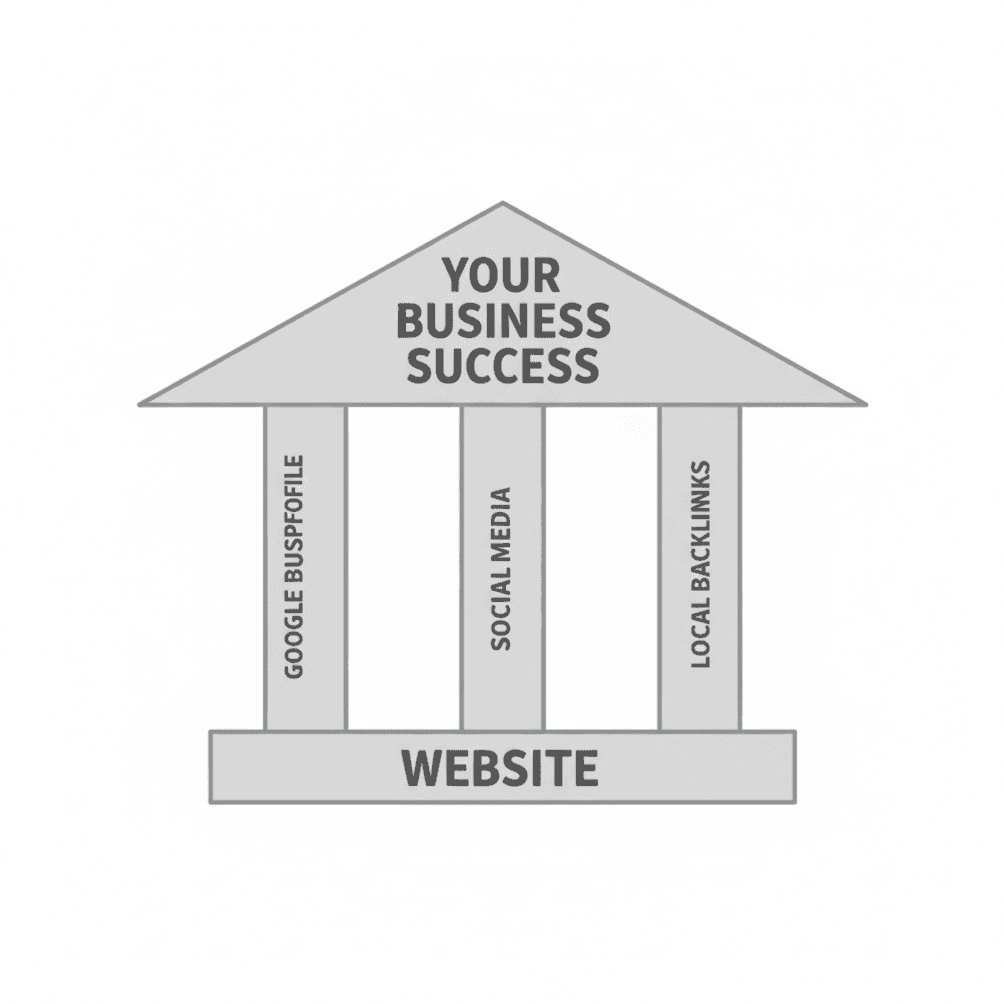
Your website is the foundation. Your Google Business Profile puts you on the map. Your social media keeps you visible. But there's a fourth piece that ties all of it together: backlinks and local citations.
If you've heard the word "backlinks" and felt your eyes start to glaze over, you're definitely not alone. It sounds technical. But the concept is actually pretty straightforward—and for service businesses trying to get found locally, it matters more than most people realize.
This guide breaks down what backlinks actually are, why they help your business show up in local search, and exactly how to start building them without blowing your budget or wasting time on tactics that don't deliver.
What Are Backlinks (And Why Should You Care)?
A backlink is just a link from another website to yours. When your local Chamber of Commerce lists your business on their member directory and includes a link to your website, that's a backlink. When a local blog writes about your company and links to your site, that's a backlink too.
Think of backlinks as digital referrals. The same way a recommendation from a trusted neighbor carries weight, a link from a respected local website tells Google: "This business is real, active, and worth paying attention to."
How Backlinks Affect Your Visibility
Google uses over 149 factors to determine local search rankings. Link signals—the quality and quantity of websites linking to yours—account for roughly 26% of local organic ranking factors, making them one of the most significant influences on where your business shows up in search results.
In plain terms, that means when someone searches "plumber in [your city]," Google is partly deciding who to show based on who has more trustworthy websites linking to them. If your competitor has links from the local Chamber, BBB, and a few community organizations—and you don't—they have a real advantage.
Backlinks vs. Citations: What's the Difference?
You'll hear both terms come up in local SEO conversations. Here's the simple breakdown:
Backlink: A clickable link from another website directly to yours. It passes "link equity" that helps your site rank higher.
Citation: A mention of your business name, address, and phone number (NAP) on another website—with or without a link. Think directory listings like Yelp, Yellow Pages, or your local Chamber site.
Both matter. Citations help Google verify that your business is legitimate and confirm your location. Backlinks signal authority and trust. The strongest local SEO strategy includes both.
Why Local Backlinks Matter More Than Random Ones
Not all backlinks carry the same weight. A link from some random website in another country isn't going to help your local plumbing business nearly as much as a link from your city's Chamber of Commerce or a local news outlet.
Local relevance is what makes the difference. When Google sees that local organizations, directories, and websites are linking to you, it reinforces that your business is an established, trusted part of that community. This is especially important for service businesses competing for "near me" searches.
A handful of high-quality local backlinks will do more for your rankings than dozens of random links from irrelevant sites. Quality over quantity, every time.
The Best Sources for Local Backlinks
Here's where service businesses should focus their energy. These are realistic, achievable sources that don't require a big marketing budget or any technical expertise—just some time and follow-through.
Chamber of Commerce
Your local Chamber of Commerce is one of the easiest and most valuable backlinks you can earn. Chamber websites typically have high domain authority (a measure of how trusted a site is), and membership usually includes a listing with a link to your website.
What it costs: Annual dues vary by location and business size, but typically range from $200–$500 per year for a small business.
What you get: A trusted backlink, a local citation, networking opportunities, and credibility with customers who view Chamber membership as a trust signal.
Pro tip: Don't just pay your dues and forget about it. Show up to events, volunteer to speak, or contribute content to the Chamber's blog or newsletter—each of those can earn you additional mentions and links.
Better Business Bureau (BBB)
The BBB is another high-authority site that provides both a backlink and a trust signal. While Google doesn't use BBB accreditation as a direct ranking factor, the backlink from BBB.org does carry SEO value, and the accreditation badge can improve customer trust and conversion rates.
What it costs: Accreditation fees vary by business size, typically starting around $500 per year.
Is it worth it? For service businesses—especially those in industries where trust is a big deal (HVAC, plumbing, electrical, roofing)—the combination of a strong backlink plus a recognizable trust badge makes it a solid investment. If budget is tight, though, prioritize your Chamber membership first.
Local and Industry-Specific Directories
Beyond the big names, there are directories that specifically serve your industry or area. Focus on listing your business in directories that are relevant and trusted:
Yelp (free to claim)
Bing Places for Business (free)
Facebook Business Page (free)
Angi (formerly Angie's List)
HomeAdvisor
Nextdoor Business Page
Thumbtack
Industry-specific directories for your trade
Important: When you claim and complete these listings, make sure your business name, address, phone number, and website URL are exactly the same across every platform. (More on why this matters in the NAP section below.)
Community Sponsorships and Local Organizations
Sponsoring local events, sports teams, schools, or charities often includes a link on the organization's website—usually on a "sponsors" or "partners" page. These backlinks are valuable because they come from trusted local institutions.
Some examples: local Little League or youth sports teams, school fundraisers or booster clubs, community festivals or charity events, local Habitat for Humanity chapter, church or community center events.
These aren't just backlinks—they represent genuine community involvement that builds goodwill and gets your name in front of local residents. The backlink itself is really just a bonus.
How to find opportunities: Search "[your city] + sponsors" or "inurl:sponsors [your city]" to find organizations that are actively looking for sponsors. Many list their current sponsors on their websites, so you can preview the link opportunity before committing.
Local Business Associations and Trade Groups
Industry-specific associations often maintain member directories that include links. For contractors, this might include:
Local Home Builders Association
State contractor associations
Trade-specific groups (plumbing, electrical, HVAC associations)
BNI or other networking groups with online directories
These links are especially valuable because they're both local and industry-relevant—exactly what Google wants to see.
Local News and Media Mentions
Getting mentioned in local news outlets, blogs, or online publications can earn powerful backlinks from high-authority sites.
Ways to earn local media links:
Reach out to local journalists with newsworthy stories about your business
Offer expert commentary on relevant local issues (storm damage, seasonal maintenance, etc.)
Submit press releases for significant business milestones
Contribute guest articles to local business blogs or news sites
You don't need a PR agency for any of this. A simple email to a local reporter or blogger, introducing yourself as a local expert in your field, can open a lot of doors.
NAP Consistency: The Foundation of Local Citations
Before you dive into building citations and backlinks, there's one thing you need to get right first: NAP consistency.
NAP stands for Name, Address, Phone Number. Every single listing, directory, and mention of your business online should use the exact same information. Not "close enough"—exact.
Why it matters:
Google cross-references your business information across the entire web. When it sees consistent NAP data everywhere, it gains confidence that your business is legitimate and located where you say you are. Inconsistent information—different phone numbers, slight address variations, or business name discrepancies—can confuse search engines and hurt your rankings.
Common NAP mistakes to avoid:
"Street" vs. "St." or "Avenue" vs. "Ave." (pick one format and stick with it)
Old phone numbers sitting on forgotten directory listings
Inconsistent business names ("Mike's Plumbing" vs. "Mike's Plumbing LLC" vs. "Mike's Plumbing Services")
Suite or unit numbers included on some listings but not others
How to fix it:
Decide on your official NAP format
Update your website with this exact information
Update your Google Business Profile to match
Audit your existing directory listings and correct any inconsistencies
Use the same format for all new listings going forward
This isn't the most exciting work, but it's foundational. Skipping it undermines everything else you do for local SEO.
What NOT to Do: Backlink Mistakes That Can Hurt You
Buying Cheap Backlinks
You'll come across services offering "500 backlinks for $50" or similar deals. Avoid them. These are almost always low-quality links from spammy websites that can actually damage your rankings. Google is smart enough to recognize—and penalize—artificial link-building schemes.
Irrelevant Directory Spam
Getting listed on every random directory you can find isn't a strategy—it's just noise. Focus on directories that are actually relevant to your industry, your location, or both. A listing on a legitimate local business directory is worth far more than 20 listings on obscure sites nobody visits.
Ignoring Existing Listings
A lot of businesses have old, outdated listings scattered across the web from previous owners, old addresses, or sign-ups they forgot about. These inconsistencies hurt your NAP and can confuse both Google and potential customers. Take time to audit what's already out there before you start building new citations.
Expecting Overnight Results
Backlink building is a long-term strategy. Unlike paid ads, backlinks compound over time. The Chamber link you earn today might not move the needle this week, but six months from now—combined with the other citations and links you've been building—it contributes to a stronger foundation that keeps working for you.
How Backlinks Fit Into Your Overall Online Presence
Throughout this series, we've talked about the pillars of a strong local online presence:
Your website is the foundation—the place where everything points back to
Your Google Business Profile makes you visible in Maps and local search
Your social media keeps you top of mind and builds community trust
Your backlinks and citations tell Google you're a legitimate, established local business worth ranking
When someone in your service area searches for what you do, Google weighs all of these signals together. The businesses that show up first are usually the ones that have invested in all four—not just one or two.
What to Do This Week
If you're starting from scratch:
Claim and verify your Google Business Profile (if you haven't already)
Make sure your website has your correct NAP in the footer
Claim your free listings on Yelp, Bing Places, and Facebook
Research your local Chamber of Commerce membership options
If you have the basics covered:
Audit your existing listings for NAP consistency
Identify 3-5 local organizations you could sponsor or join
Look for industry-specific directories relevant to your trade
Search for local blogs or news sites that accept guest contributions
Ongoing:
Add 1-2 quality citations or backlinks per month
Keep all listings updated when your information changes
Look for natural sponsorship and community involvement opportunities
Monitor your Google Business Profile for new reviews and questions
The Bottom Line
Backlinks and local citations aren't glamorous, but they're one of the most effective ways to improve your local search visibility. For service businesses competing in a specific geographic area, local backlinks signal to Google that you're a real, trusted part of the community.
You don't need hundreds of backlinks. You need the right ones—from local organizations, trusted directories, and community partners who can vouch for your business.
Start with the easy wins: Chamber of Commerce, BBB, and the major directories. Then build from there with sponsorships, associations, and local media opportunities. Over time, these digital referrals compound, making it easier and easier for local customers to find you.
Your website is the foundation. Your Google Business Profile gets you on the map. Your social media keeps you visible. And your backlinks? They're the trust signals that tie it all together.
This article is part of our series on building a complete online presence for service businesses. Read The 3 Pillars Every Service Business Needs to Get Found Online to see how your website, Google Business Profile, social media, and backlinks work together to grow your business.